A Complete Guide on Getting The Perfect Integrated Dishwasher For You
Integrated dishwashers are designed to blend into your kitchen, hidden behind cabinetry for a seamless look. When choosing the right model, there are a few things to consider.
Sizing
Integrated dishwashers come in two sizes, full-sized (60cm wide) and slimline (45cm wide).
Full-sized integrated dishwashers are ideal for families or larger households as these dishwashers typically hold 14 place settings, giving you more space for your dishes and cutlery.
Slimline integrated dishwashers are perfect for smaller kitchens or tighter spaces.
Installation
Full-sized integrated dishwashers have two installation types:
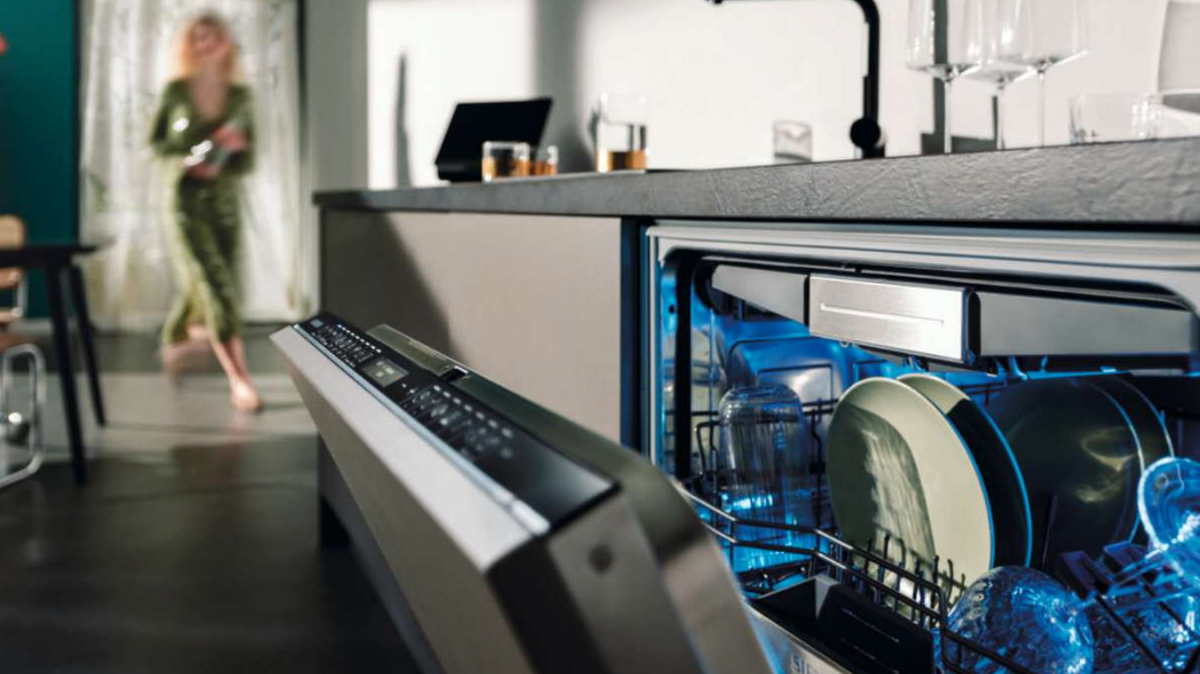
Fully Integrated - This installation is completely seamless with the controls hidden behind the kitchen cabinetry on the top panel of the dishwasher door.
Fully-Integrated dishwashers can also come with a sliding hinge installation, this allows for the cabinet to slide up when the dishwasher door is opened. This makes it easier to replace dishwashers as now you do not have to go for a like for like machine.
Semi-Integrated - The front panel matches the kitchen with a cut out for the dishwasher control panel. This means that the control panel is completely visible and gives you easy access.
Semi-Integrated dishwashers are always fixed hinge so it is important to replace your dishwasher with a like for like model. This is because the cut-out for the control panel has to remain in the same location.
Slimline integrated dishwashers come as a fully integrated fitting.
Key Features
There are a few features that are a must-have for your dishwasher to get the most out of your appliance.
Drying technology - The drying performance of your dishwasher is essential. For the best drying results look for dishwashers with an extra dry function or if you need something more efficient look at auto-door opening dishwashers.
Dishwashers that utilise minerals get the maximum drying performance whilst also being as efficient as possible.
Half Loads - When you need to clean a few dishes but can't fill up the dishwasher completely, rather than running a full load wash, the half load reduces the time as well as the energy and water used.
Intensive Cycles - If you are cooking/baking frequently, your pots and pans will build-up with heavy stains. An intensive wash uses high pressure jets to clean baked-on stains effectively.
Getting the Most For Your Money
To get the most out of the dishwasher you choose, there are a few tips and tricks to extend the lifetime of the appliance.
Clearing the filter - Every 1-2 months you should check the filter for any food residue and clear it out. This prevents the build-up of bad odours and ensures that your dishes get the best wash possible.
Clearing out the filter also prevents standing water at the base of the dishwasher after every cycle.
Salt and Rinse Aid - Depending on the hardness of your water and how frequently you use the dishwasher, you should refill your dishwasher salt ever 1 - 3 months. This is to soften hard water and reduces the build-up of limescale.
Most dishwashers will have a salt refill indicator and won't work without any dishwasher salt.
With rinse aid it is recommended to top up every 1-2 weeks. This is to prevent water spots and ensure dishes dry properly.
If you notice streaks or cloudy glassware, that is a sign for you to top up your rinse aid.
Clean Spray Arms - Check your dishwasher spray arms for any clogs or build-up of dirt and gently clean them out with a toothpick or a brush. This should be done every 3-4 months for the spray arms to work optimally.
Door Seals - Clean the door seals with a damp cloth to prevent mould build-up, this removes bad odours and keeps your dishwasher looking brand new.