What You Are Missing Out On – Washing Machines, Washer Dryers, and Tumble Dryers
The market for laundry appliances is massive, with thousands of products to choose from. This can make it confusing to find the right appliance for you.
We will break down:
- what to look for
- things to avoid
- how to get the most out of your money
Before we get into that, lets first discuss the different types of laundry appliances on the market.
Washing Machines:
Washing machines come in two types, front loaders and top loaders. Front loaders have a door at the front of the machine. In the UK, front-loading washing machines are the most common type of washing machine, this is because front loaders use less water and energy when compared to top loaders.
Top loaders are not commonly used in the UK. However, there are some advantages. Top loaders have a smaller width which means it is ideal for smaller spaces. Top loaders are easier to load for duvets and bedspreads. The main drawbacks of top loaders are their reliability and high energy usage.
Front Loading Washing machines come with a standard height of approximately 85cm and a width of 59.5cm, the depth of washing machines vary based on the drum size and manufacturer.
Washer Dryers:
Washer Dryers give you the benefit of having both a washing machine and tumble dryer in one appliance. This means it saves space in your home.
Washer Dryers have the same width and height as front loader washing machines. The depth varies based on the drum size.
Tumble Dryers:
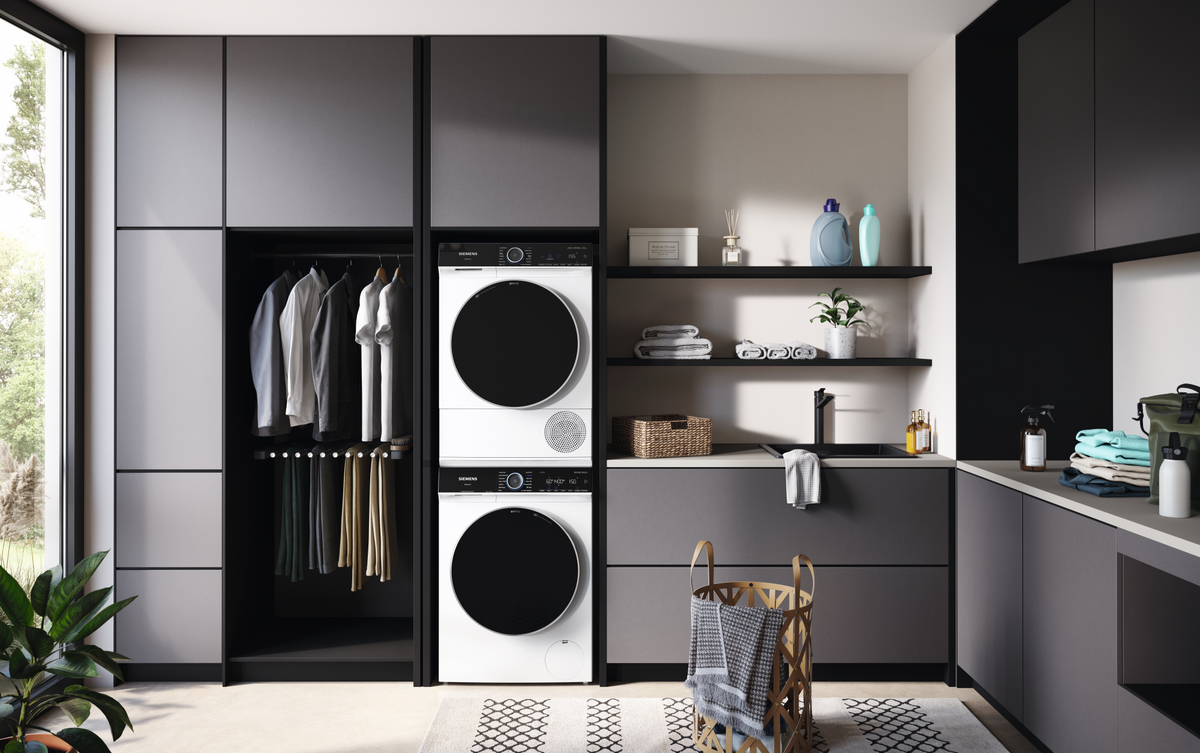
There are 3 different types of tumble dryers: heat pump, condenser and vented.
Heat pump tumble dryers are the most energy efficient. It works by absorbing surrounding air which is then passed through a heat exchanger to warm up the air. This is used to heat up and dry clothes in the drum.
Condenser Dryers operate with a heating element inside the machine. This makes the drying process quicker but makes condenser dryers less energy efficient.
Vented dryers also use a heating element. Vented dryers have a vent that expels humid air to the outside. This means that you don’t have to empty out a condenser tray after every drying cycle.
What To Look Out For
When buying any laundry appliance there are a few things to look out for. In this section we will go over some generic advice.
Some points to consider are:
- Type of installation required for your appliance
- The space available to you
- The size of the drum that you need
Type of Installation Required:
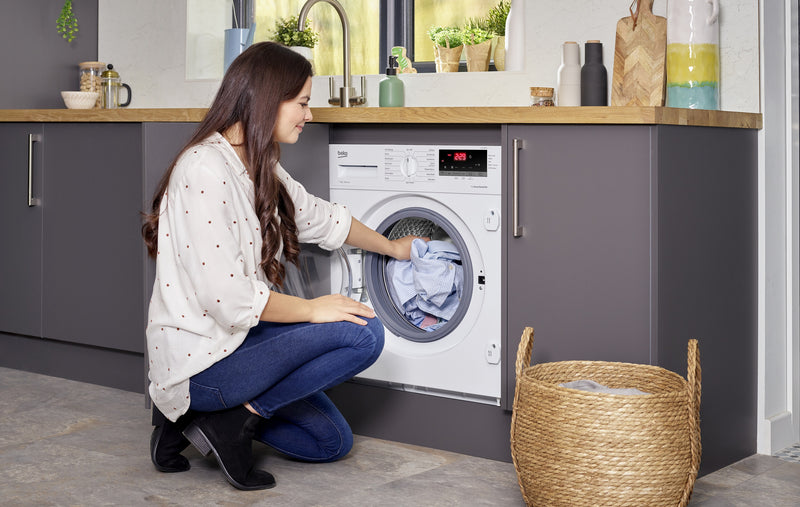
There are two installation types for laundry appliances. Either a freestanding installation or an integrated installation.
Freestanding installation means that when the appliance is fitted, it is still visible.
Integrated appliances have a cabinet door attached to the front of the machine as well as a casing that the machine fits into. This requires a specialist carpenter to install.
For advice on buying or replacing integrated appliances call our experts on 02030519780.
The space available to you:
Although most laundry appliances have a generic height and width, be careful about the depth of the machine. The machines depth varies based on the manufacturer as well as the size of the drum. Be sure to measure your spacing or call one of our advisors to find the right machine for your space.
Drum Size:
Based on the size of your family you may need a larger drum. Here are our recommendations to get the most life out of your appliance:
- 7kg drum – This ideal for smaller households between 2 to 3 people
- 8-9kg drum – Perfect for midsized families between 4 to 6 people
- 10kg+ - For larger households of 7+ people
Things To Avoid
When purchasing a new laundry appliance there are a few things to avoid.
Washing Machines and Washer Dryers:
With washing machines and washer dryers try to buy the right sized drum for your home. Washing machine and washer dryer prices vary based on drum size. Buying a smaller drum may be beneficial if it suits your requirements but buying a smaller drum to save in the short term can be costly later down the line.
Tumble Dryers:
If you are planning to place your tumble dryer in a cold room with little or no insulation, it may be better to go for a condenser dryer rather than a heat pump dryer. Heat pump dryers become less effective and have longer cycle times when placed in a cold room.
If you are placing your dryer in a well-insulated room then heat pump tumble dryers are a great option as they offer you an energy efficient way to dry your clothes and help you save on your energy bills compared to condenser and vented tumble dryers.
Cold rooms do not effect condenser dryers as much. This is because condenser dryers have heating elements to warm up the air absorbed from its surroundings.
It may also be worth while to buy a washer dryer. Washer dryers give you the convenience of both a washing machine and a tumble dryer without taking up too much space.
How To Get the Most Out of Your Money
When buying an appliance, you want to get the best value for what you spend. With laundry appliances there are a few tips and tricks to get the most life out of the appliance that you bought.
We recommend using any laundry appliance 2-3 times per week. This eases the load on the drum which extends the life of the machine.
As a rule of thumb, try to fill up the machine to a maximum of 2/3 of the way. This ensures that you never accidentally overload the drum.
Avoid regularly using quick programs or small load cycles. Constantly underloaded drums tend to damage the bearings of the machine and decrease the products lifetime. Quick washes are also cold water washes so using them frequently encourages mould build up on the door seal.
For washing machines and Washer Dryers, clean out the filter at the bottom right-hand side of the machine every 4-6 months. Remove any items stuck inside such hair, tissues, socks and coins.
On top of this we recommend cleaning out the detergent drawer and removing any build-up of dirt/mould around the appliance door seal. This helps clear up any blockages as well as removing odours from the machine.
With tumble dryers, you will need to clear out the condenser drawer and the fluff filter after every use. Place your dryer in a well-insulted space if possible. This helps the machine run better as well as helping the appliance last longer.