Tumble Dryer Season
The weather is always horrible during the winter period. This adds to the workload when doing your laundry in an already busy schedule. The weather is unpredictable and in London, indoor spaces are often limited which makes it challenging to find a place to let your clothes dry.
If you're looking to buy a tumble dryer, there are different types and it can be overwhelming to decide on which one to go for.
So we've put together a guide to choose the best one for you.
Types of Dryers
There are three types of dryers to choose from, we will list out the key benefits and the main disadvantages.
Vented Tumble Dryers
Vented dryers have almost been completely phased out of the market. There are only a few examples left.
Vented dryers operate by expelling moist air through a vent connected to an external wall or window. Vented dryers are typically cheaper when compared to other dryers, but have a higher cost to run due to them being less energy efficient.
Advantages: Cheaper than the others, less maintenance required.
Disadvantages: Much less energy efficient, requires a vent to operate.
Condenser Tumble Dryers
Condenser dryers collect moisture into a removeable container or through a waste pipe connection. They do not need an external vent, making them more flexible in terms of where you can place them. But require regular cleaning of fluff filter and emptying the condenser tray after every cycle (if not connected to a waste pipe).
Advantages: Quicker than heat pump dryers, can be connected to a waste pipe.
Disadvantages: Less energy efficient, more maintenance required compared to a vented dryer.
Heat Pump Tumble Dryers
Heat pump dryers are the most energy efficient option. Heat pumps are similar to condenser dryers in the sense that they are quite flexible and can be placed anywhere. The main difference between the two, is that heat pump tumble dryers operate by taking in warm air in its surrounding to assist in the drying cycle. This allows for lower energy consumption as less heat is needed to dry your clothes, but this means that drying times take longer when compared to condensers and vented dryers.
Advantages: Energy efficient, can be connected to a wastepipe.
Disadvantages: Much longer drying cycles compared to the others (if not placed in a well-insulated room with heating), Will struggle in rooms that are cold (i.e garages, out houses).
Washer Dryers
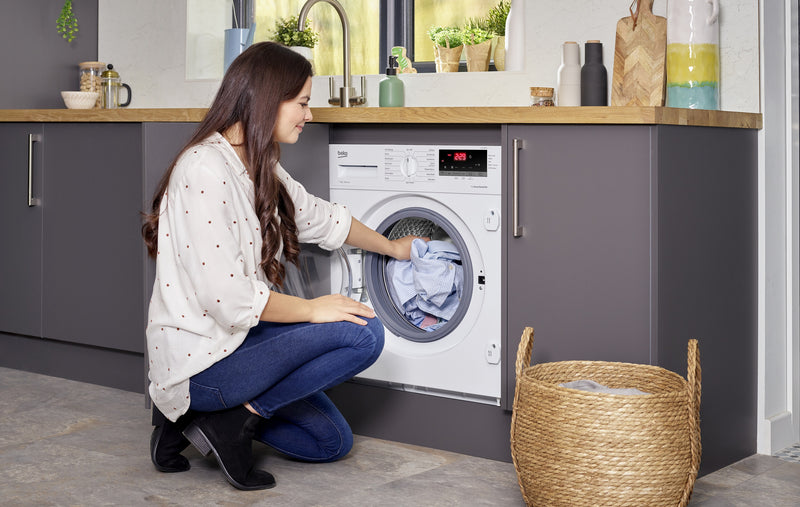
Washer dryers are appliances that combine the functions of a washing machine and tumble dryer in one unit, this takes up less space which is ideal for homes with less space.
Advantages: Less space needed, already connected to drains so no need to empty out a condenser tray.
Disadvantages: Limited programs on the drying cycle, lower capacity for the drying cycle.
Considerations
Spacing
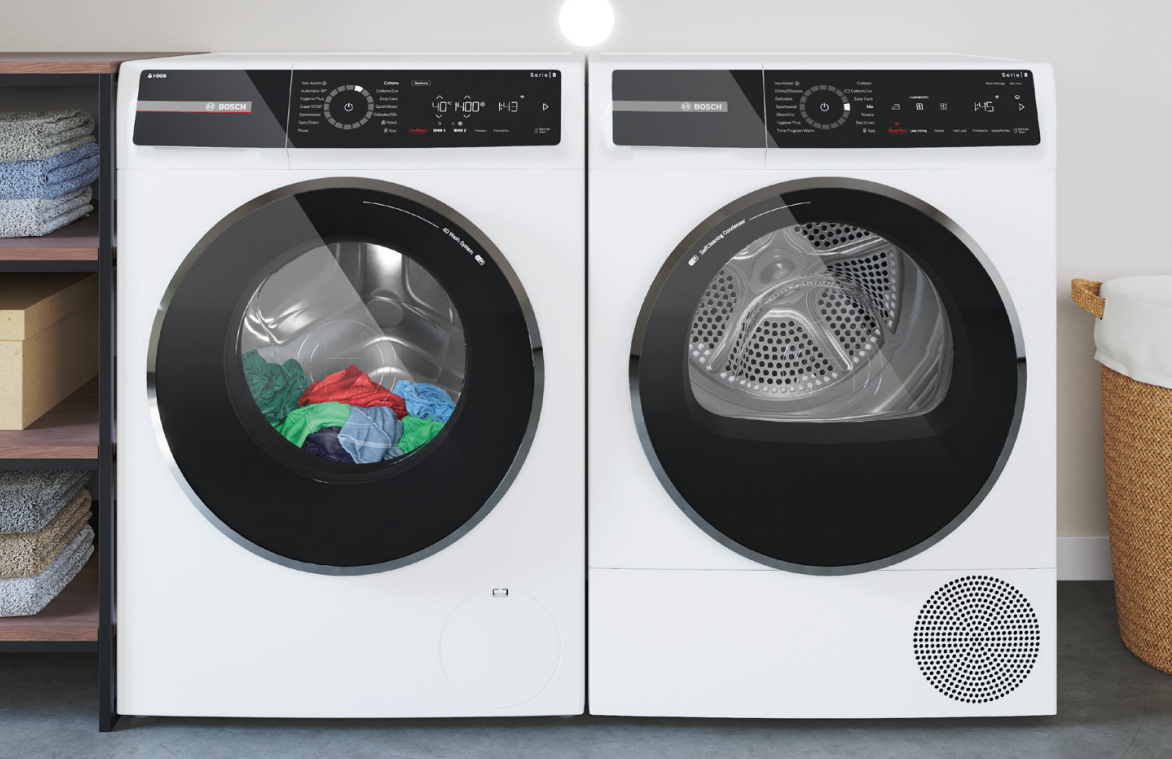
If you are someone that has the space, it is always best to go for two separate units. This is because it gives you the most flexibility in terms of programs and load capacity.
However, we know that this is not always possible. Washer dryers can be useful for houses with limited spacing. We recommend to use the drying cycles on a washer dryer only when needed. Wherever possible, try to let your clothes airdry. This will help to keep the washer dryer running for as long as possible.
Heat pump
Heat pump technology is now becoming the norm for tumble dryers. Due to energy efficiency regulations normal condensers and vented dryers are being phased out.
Although the longer drying times may seem inconvenient, heat pump dryers save you on your energy bills and are typically made to a higher spec compared to condensers or vented dryers.
Frequently Asked Questions
What load is suitable for me?
The drum size is dependant on how much you use it. If your household has 1-2 people, we recommend a smaller drum. 7kg tumble dryers are best suited for you.
For 3-4 people or people that frequently wash their duvets, we advise to go for an 8kg drum size.
For families, you will need 9kg for your laundry. Try avoiding any larger drums than this as these typically breakdown quicker from consistent underloading.
Why are the drying loads on washer dryers less?
Washer Dryers will always have a smaller load for their drying cycles as wet clothes are heavier and the drying cycle needs more space in the drum to allow hot air to circulate and dry your clothes.
This just means washer dryers need a little bit of a work around and planning to make sure your laundry days run as smoothly as possible.
Be sure to reduce the load for your clothes that need to be dried. We recommend separating the clothes that you want dried quickly and the clothes that you can wait on. Fill up the washer dryer to just under half the drum and run your wash and dry cycle.
What are important features that I shouldn't miss out on?
From customer feedback and our own experiences, there are two features which standout:
1) Dryers which offer a gentle cycle, this helps to protect your best clothes.
2) Iron assist functions, this reduces wrinkles on your clothing allowing for easier ironing and in some cases gets rid of the need to iron entirely.
Hopefully, this has made it easier for you to choose a tumble dryer, at London Appliances we pride ourselves on providing our customers with exceptional service at a competitive price, we also offer next day delivery to all London postcodes, feel free to browse our range of tumble dryers.
If you still need further assistance, feel free to contact our trained sales staff on 020 3051 9780. We are more than happy to help guide you with your purchase.